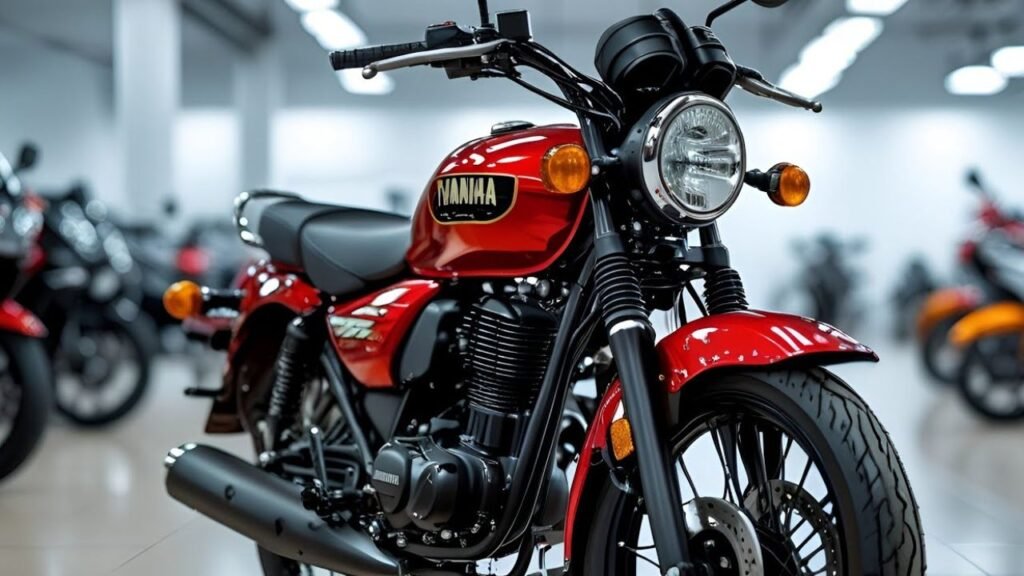

The Yamaha RX100 is not just a motorcycle; it is an emotion that still beats strong in the hearts of Indian bike lovers. Even decades after its discontinuation, the Yamaha RX100 continues to enjoy cult status, unmatched by most modern motorcycles. For riders who grew up in the late 1980s and 1990s, this bike was the ultimate dream machine—raw, loud, fast, and thrilling.
Manufactured by Yamaha, the Yamaha RX100 changed how Indians looked at performance motorcycles. At a time when most bikes were slow, heavy, and conservative, the RX100 arrived like a storm. Lightweight body, explosive power delivery, and that unforgettable exhaust note made it an instant hit across the country.
The Arrival of Yamaha RX100 in India: A Game Changer
When the Yamaha RX100 was launched in India in 1985, the market was dominated by simple commuter bikes. The RX100 brought something completely new—performance with attitude. With its compact design and powerful two-stroke engine, the Yamaha RX100 quickly became the fastest bike in its segment.
Young riders were instantly attracted to its aggressive nature. Office-goers loved its quick acceleration. College students admired its style and sound. Within no time, the Yamaha RX100 became a symbol of speed, freedom, and youth.
Classic Design That Still Turns Heads
One of the reasons the Yamaha RX100 still looks good today is its clean and timeless design. There were no unnecessary curves or bulky panels. The bike featured a simple fuel tank, flat seat, chrome mudguards, and a classic round headlamp.
The compact dimensions and slim profile made the Yamaha RX100 look sporty even when standing still. Its lightweight frame gave it a perfect balance, making it easy to ride in city traffic as well as on open highways. Even today, a well-restored RX100 can grab more attention than many modern bikes.
Powerful 98cc Two-Stroke Engine: Small But Mighty
At the heart of the Yamaha RX100 was a 98cc, air-cooled, two-stroke engine that produced around 11 horsepower. On paper, this may not sound impressive today, but back then, it was revolutionary.
What made the Yamaha RX100 special was how it delivered power. The two-stroke engine offered instant throttle response and explosive acceleration. Twist the throttle, and the bike would surge forward aggressively. This made the RX100 much faster than many bigger four-stroke bikes of its time.
The engine’s high-revving nature and sharp exhaust note created a riding experience that modern bikes simply cannot replicate.
That Iconic Exhaust Sound Everyone Remembers
Ask any RX100 fan, and the first thing they will mention is the sound. The Yamaha RX100 had one of the most recognisable exhaust notes in Indian motorcycling history.

The crisp, loud, and slightly raspy sound was music to riders’ ears. You could recognise an RX100 from far away just by hearing it. This sound became so iconic that even today, bike enthusiasts feel nostalgic the moment they hear it.
This emotional connection is one of the biggest reasons why the Yamaha RX100 remains legendary.
Also Read – Subaru Baja 2026
Lightweight Body and Razor-Sharp Handling
Weighing close to 100 kg, the Yamaha RX100 was extremely light. This lightweight construction played a huge role in its performance and handling.
The bike felt nimble, agile, and easy to control. Whether it was weaving through city traffic or taking sharp corners on twisty roads, the RX100 handled everything with ease. New riders found it easy to learn, while experienced riders enjoyed pushing it to its limits.
This perfect balance of power and weight made the Yamaha RX100 a rider’s bike in the truest sense.
Simple Yet Effective Features
The Yamaha RX100 did not rely on fancy technology. It kept things simple and effective. A 4-speed manual gearbox delivered smooth and quick gear shifts. Telescopic front forks and rear swingarm suspension handled Indian road conditions reasonably well.
Braking duties were managed by drum brakes at both ends. While they may seem outdated today, they were adequate for the bike’s weight and speed during that era.
The simplicity of the Yamaha RX100 made it easy to maintain and repair, even in small towns and villages.


Mileage and Practicality in Real Life
Mileage was never the strongest point of the Yamaha RX100, but it was acceptable for a performance bike. In real-world conditions, the RX100 delivered around 25–30 km/l, depending on tuning and riding style.

Many enthusiasts claim that with careful riding and proper maintenance, mileage could go slightly higher. However, most owners were happy to sacrifice a bit of fuel efficiency for the thrill it offered.
Even today, some modified and well-maintained RX100s are said to deliver close to 40–50 kmpl, though this varies widely.
Why Yamaha RX100 Became a Cult Classic
The Yamaha RX100 was discontinued in 1996 due to stricter emission norms, as two-stroke engines were more polluting. But discontinuation only increased its desirability.
Over the years, the RX100 transformed from a regular motorcycle into a cult classic. Enthusiasts began restoring old models, modifying engines, and preserving original parts. Owning a Yamaha RX100 today is seen as owning a piece of motorcycling history.
The bike also became popular in drag races and street racing scenes due to its quick acceleration and tuning potential.
Restoration Culture and Collector’s Value
Today, the Yamaha RX100 is one of the most restored motorcycles in India. Original spare parts are rare, and fully stock models are highly valued.
Depending on condition and originality, a Yamaha RX100 can cost anywhere between ₹50,000 and ₹1,50,000, or even more for showroom-condition bikes. Some collectors are willing to pay a premium just to own a clean RX100.
This growing collector’s value proves how timeless and loved the RX100 truly is.
Can Yamaha RX100 Still Be Used Daily?
Yes, the Yamaha RX100 can still be used for daily commuting if it is well maintained. However, there are challenges. Spare parts are becoming harder to find, fuel efficiency is lower compared to modern bikes, and two-stroke oil is an added expense.
That said, many riders still choose the RX100 for short rides, weekend outings, and nostalgic trips. The joy it delivers is something no modern commuter bike can match.

Why Modern Bikes Cannot Replace RX100’s Charm
Modern motorcycles are faster, safer, and more fuel-efficient, but they lack the raw character of the Yamaha RX100. Emission norms, electronic systems, and weight have changed how bikes feel today.
The RX100 offered a direct mechanical connection between rider and machine. No filters, no electronics—just pure riding pleasure. This is why even today, people ask Yamaha to bring back the RX100, though it may never be the same.
Yamaha RX100: More Than a Bike, It’s an Emotion
For many Indians, the Yamaha RX100 represents their youth, their first ride, or their dream bike. It reminds people of simpler times when riding was all about feel, sound, and freedom.
Even decades later, the RX100 continues to inspire passion, discussions, and admiration. It has achieved something very few motorcycles ever do—it has become immortal.
Final Verdict: Yamaha RX100 Will Always Be a Legend
The Yamaha RX100 is not just remembered; it is celebrated. With its classic design, powerful two-stroke engine, lightweight body, and iconic sound, it changed Indian motorcycling forever.
While it may never return in its original form, the legacy of the Yamaha RX100 will live on through collectors, restorers, and passionate riders. If you ever get the chance to ride one, take it—because legends like this come once in a lifetime.
Some Important Link
| Download News APP | Click Here |
| WhatsApp Group | Click Here |
| Home Page | Click Here |