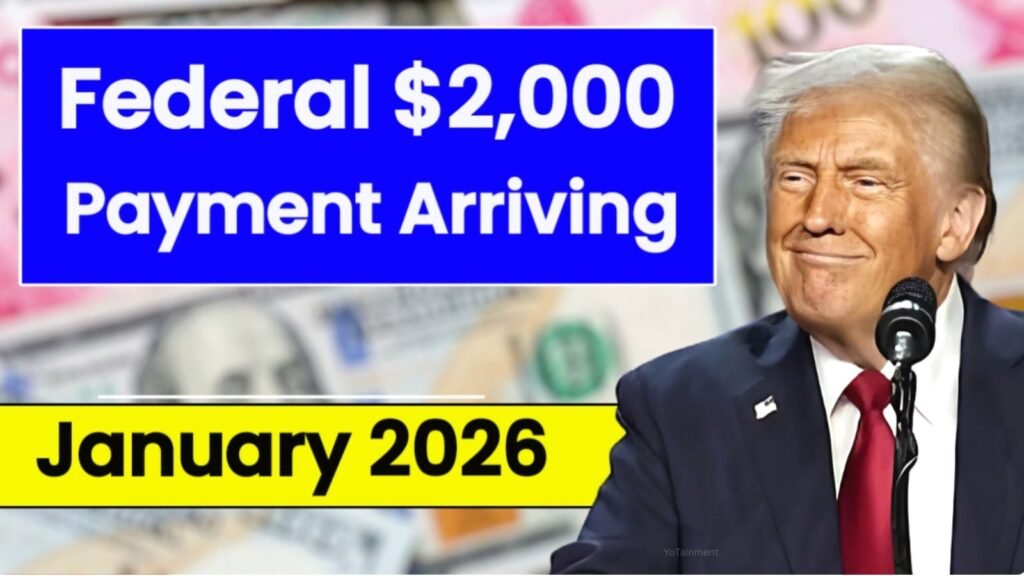

As the United States approaches the start of 2026, conversations around Federal $2,000 Payments have become increasingly common among individuals and families planning their finances for the new year. Many households are looking for clear, reliable information about whether these payments are real, who might qualify, and when the money could arrive. Based on currently available guidance, the Federal $2,000 Payments expected in January 2026 are being discussed as a one-time federal disbursement aimed at providing targeted financial relief to eligible individuals and families.
While the final structure of the Federal $2,000 Payments depends on the specific authorizing legislation or program rules, the overall intention is clear: to offer temporary assistance to households facing ongoing financial pressure. Rising living costs, lingering inflation, and uncertainty around essential expenses have made short-term federal support especially important for many Americans. By using existing government systems—such as tax records, benefit databases, and verified enrollment information—these payments are designed to reach eligible recipients efficiently.
The January 2026 timeline carries particular significance. Many people rely on predictable federal support to manage rent, utilities, healthcare expenses, groceries, and other necessities. Having accurate information about the Federal $2,000 Payments, including eligibility requirements, payment delivery methods, and timing, can help beneficiaries avoid confusion, missed funds, or unnecessary stress. This article explains the purpose, expected process, and practical considerations surrounding the Federal $2,000 Payments in plain, accessible language.
Understanding the Purpose of the Federal $2,000 Payments
The Federal $2,000 Payments expected in January 2026 are widely described as a one-time relief measure rather than an ongoing or recurring benefit. The primary goal of these payments is to provide short-term financial support to qualifying individuals and households, especially those with limited or fixed incomes who are most affected by rising costs.
Unlike permanent benefit increases, one-time Federal $2,000 Payments allow the government to address immediate economic concerns without permanently expanding federal spending programs. This approach has been used in the past during periods of economic strain, when targeted assistance was needed but long-term policy changes were not yet in place.
It is important to distinguish these Federal $2,000 Payments from regular monthly benefits such as Social Security, Supplemental Security Income, veterans’ benefits, or other recurring federal programs. These payments are expected to stand alone and should not replace or reduce existing benefits. For many recipients, this distinction offers reassurance that their regular income streams will remain unchanged.
Historically, similar federal payments were structured to help recipients handle short-term financial challenges—such as increased utility bills, healthcare costs, or unexpected household expenses—without affecting eligibility for other programs. While final treatment depends on the specific rules established for the Federal $2,000 Payments, the general intent is to provide supplemental support rather than long-term dependency.
Why the January 2026 Timeline Matters
The timing of the Federal $2,000 Payments is especially important. January is often one of the most financially demanding months of the year for many households. Expenses related to the winter season, higher heating costs, insurance premiums, and post-holiday bills can place additional strain on already tight budgets.
For individuals living on fixed incomes, even modest increases in costs can create financial stress. The arrival of Federal $2,000 Payments early in 2026 may help offset these pressures, giving households a chance to stabilize their finances before expenses accumulate further.

In addition, many beneficiaries rely on predictable federal support to plan their monthly budgets. Clear communication about when the Federal $2,000 Payments are expected allows recipients to make informed decisions about spending, saving, or addressing overdue bills.
Eligibility Factors Beneficiaries Should Be Aware Of
Eligibility for the Federal $2,000 Payments is expected to be determined using a combination of income thresholds, filing status, and participation in existing federal programs. While final eligibility rules depend on official guidance, federal agencies typically rely on verified data sources to identify qualified recipients.
Recent tax return information often plays a central role in determining eligibility for Federal $2,000 Payments, as it provides accurate income details and household composition. Individuals who file federal tax returns regularly may have their eligibility assessed automatically using this data.
Participation in federal benefit programs may also be considered. Beneficiaries of Social Security, disability assistance, veterans’ benefits, or similar programs are often included in eligibility assessments for one-time federal payments. These programs already maintain verified records, making it easier to distribute Federal $2,000 Payments efficiently.
Citizenship or residency status may also factor into eligibility. Federal definitions typically apply, and beneficiaries are encouraged to rely on official announcements rather than informal online claims. Because eligibility rules can vary, reviewing confirmed guidance related to the Federal $2,000 Payments is essential.
Checking eligibility early can help reduce anxiety and give individuals time to address potential issues, such as outdated records or missing information, before payments are issued.
How Federal $2,000 Payments Are Expected to Be Delivered
Direct deposit is widely expected to be the primary method for delivering the Federal $2,000 Payments. When beneficiaries already receive tax refunds or federal benefits electronically, agencies often use the same banking information to issue payments. This approach is faster, more secure, and reduces the likelihood of lost or delayed funds.
For individuals who do not have direct deposit information on file, alternative methods such as paper checks or prepaid debit cards may be used. These options typically take longer due to processing and mailing times, but they ensure that eligible recipients can still receive their Federal $2,000 Payments.
Beneficiaries who have recently changed banks or moved to a new address are strongly encouraged to update their information well before January 2026. Accurate records are critical to ensuring that Federal $2,000 Payments reach the correct recipient without requiring reissues or additional verification.

What Beneficiaries Can Expect During the Payment Process
Federal payment programs usually distribute funds in batches rather than all at once. The Federal $2,000 Payments are expected to follow a similar pattern, with payments issued over a defined window rather than a single day.


Some recipients may see their Federal $2,000 Payments arrive earlier than others, depending on processing order, banking institutions, and verification status. It is also common for deposits to appear as “pending” before becoming fully available in an account.
For those receiving paper checks or debit cards, delivery times may vary based on postal service schedules. Understanding these factors can help manage expectations and reduce unnecessary concern if payments do not arrive immediately.
Tracking Your Federal $2,000 Payment and Handling Delays
Most federal payment initiatives provide tools to help beneficiaries track their payments. These tools may include online portals, automated phone systems, or customer service helplines. Such systems allow individuals to confirm whether their Federal $2,000 Payments have been processed, sent, or returned.
When checking payment status, having basic personal information ready—such as date of birth or partial Social Security number—can make the process smoother. If a Federal $2,000 Payment does not arrive within the expected timeframe, beneficiaries are usually advised to wait through the full processing window before taking further action.
If delays persist, a formal trace or reissue request may be available through the issuing agency. Banks can also assist in identifying issues with direct deposits, such as posting delays or account mismatches.
Practical Uses of the Federal $2,000 Payments
While there are typically no restrictions on how Federal $2,000 Payments are used, many households rely on them to cover essential needs. Common uses include rent or mortgage payments, utility bills, food expenses, healthcare costs, and transportation.
Some recipients may choose to use their Federal $2,000 Payments to reduce debt or build a small emergency fund. Even modest savings can provide a sense of security in uncertain economic conditions.
Because the payments are one-time in nature, financial advisors often recommend using them thoughtfully—addressing immediate needs first, then considering longer-term financial stability where possible.

Important Precautions and Scam Awareness
As public interest in the Federal $2,000 Payments grows, so does the risk of scams. Fraudsters often take advantage of confusion surrounding federal programs by posing as government representatives.
Beneficiaries should remember that federal agencies do not request sensitive personal information through unsolicited phone calls, emails, or text messages. Any message asking for fees, passwords, or urgent personal details related to Federal $2,000 Payments should be treated as suspicious.
Staying informed through official government websites and verified announcements is the safest way to obtain accurate information. Avoiding third-party “assistance” services that charge fees can help protect both personal data and finances.
Keeping Records and Staying Prepared
Maintaining copies of tax returns, benefit letters, and official notices is a simple but effective way to prepare for receiving Federal $2,000 Payments. These documents can help resolve issues quickly if questions arise about eligibility or payment status.
Keeping personal information updated with relevant agencies is equally important. Accurate records reduce the risk of delays and ensure that Federal $2,000 Payments are delivered as intended.
Final Thoughts on Federal $2,000 Payments Arriving January 2026
The discussion around Federal $2,000 Payments arriving in January 2026 reflects broader concerns about financial stability and rising living costs. While these payments are not a long-term solution, they offer meaningful short-term relief to eligible individuals and families.
By understanding the purpose of the Federal $2,000 Payments, staying informed about eligibility and delivery methods, and taking basic precautions, beneficiaries can navigate the process with confidence. Clear information and preparation are key to ensuring that these funds provide the intended support during the early months of the new year.
Disclaimer
This article is for informational purposes only and is based on publicly available guidance and general federal payment practices. Program rules, eligibility criteria, payment amounts, and timelines for the Federal $2,000 Payments expected in January 2026 may change based on official government decisions. Readers should consult verified .gov websites or contact the appropriate federal agency directly for the most accurate and up-to-date information.
Some Important Link
| Download News APP | Click Here |
| WhatsApp Group | Click Here |
| Home Page | Click Here |